Tuesday, December 4, 2012

Anna Wintour, Ambassador? Obama Reportedly Considers Tapping Vogue Editor For U.K. Or France Ambassadorship

The ambassador wears Prada? Maybe so.

Anna Wintour, longtime editor-in-chief of Vogue, is in the running to be President Barack Obama's next ambassador to either the United Kingdom or France, Bloomberg reports.

Wintour was one of Obama's highest profile fundraisers this election cycle, helping design a fashion line that earned his campaign $40 million. She also hosted a $40,000-a-plate fundraiser with actress Sarah Jessica Parker in June, and a $35,000-a-plate f?te with Hollywood mega-producer Harvey Weinstein in August.

Per Bloomberg:

Wintour, 63, may have some competition for the London posting, with Matthew Barzun, the finance chairman of Obama's presidential campaign, also interested in the job, officially known as ambassador to the Court of St. James's, said the people, who requested anonymity.

Both Wintour and Barzun were among Obama's biggest bundlers in the campaign, with each raising more than $500,000 to help re-elect the president. Marc Lasry, the managing partner and founder of Avenue Capital Management, covets the Paris embassy, said the people.

Speculation first surfaced that Obama might tap the British-born editor as ambassador last summer, when the Guardian ran a piece reporting the possibility. A state department representative skirted the issue at the time, saying:

An ambassador serves at the pleasure of the president. It's a designation of the most qualified person. But it would be erroneous to think of London as a nice, cushy, westernised post. This is a key strategic ally, so you're going to want a very seasoned person, be it on the economic or diplomatic side of things.

The White House declined to comment when approached by Bloomberg for the story.

Related on HuffPost:

"; var coords = [-5, -72]; // display fb-bubble FloatingPrompt.embed(this, html, undefined, 'top', {fp_intersects:1, timeout_remove:2000,ignore_arrow: true, width:236, add_xy:coords, class_name: 'clear-overlay'}); });

Source: http://www.huffingtonpost.com/2012/12/03/anna-wintour-ambassador-uk-france_n_2235427.html

st. joseph puerto rico primary manning peyton florida state meghan mccain wilson chandler

Video: Medicare Costs & the Fiscal Cliff

Sorry, Readability was unable to parse this page for content.

Source: http://video.msnbc.msn.com/cnbc/50077515/

megan fox Bb&t Lane Goodwin Romnesia eminem eminem Samantha Steele

Telling History vs. Making Art: Killer Angels, real and fictional ...

Part five in a?series.

In my last post, I began to discuss Michael Shaara?s aesthetic choices for constructing?The Killer Angels?as he did, and how he adopted a Lost Cause-interpretation of Robert E. Lee as a central choice for his novel.

Where Shaara deviates significantly from Lost Cause tradition, though, is his choice to make Confederate Lieutenant General James Longstreet a hero of the novel. Longstreet was Lee?s left hand and second in command. However, Lost Cause advocates, particularly Confederate generals Jubal Early and Fitzhugh Lee, scapegoated Longstreet (and others) for the Southern defeat at Gettysburg?all in an attempt to absolve Lee and preserve his Marble Man status.?Longstreet didn?t help his own case after the war by becoming a Republican, accepting various government jobs, and criticizing Lee. History has not been kind to Lee?s ?Old Warhorse.??Shaara?s sympathetic treatment of him in?The Killer Angels?almost single-handedly resurrected public interest in Longstreet?s controversial career.

On the Federal side, Shaara focuses on cavalryman John Buford and, most significantly, Colonel Joshua Lawrence Chamberlain of the 20th Maine Infantry. Posted at the far left flank of the Union army on a piece of topographically important ground, Chamberlain?s men had to beat back a series of Confederate attacks on July 2, 1863. ?You cannot withdraw,? Chamberlain?s commander tells him in the novel. ?Under any conditions. If you go, the line is flanked. If you go, they?ll go right up the hilltop and take us in the rear. You must defend this place to the last.?

The action as depicted in the novel and, later, in the movie?Gettysburg, and as recounted in Ken Burns??The Civil War, has become the stuff of legend?in fact, ?far more legend than history,? says historian Tom Desjardin. ?Shaara?s novelized version of Chamberlain?s day at Gettysburg exceeds by any measure the historical fact of the event.?

But Desjardin points out that Shaara isn?t attempting to chronicle Chamberlain?s day. Rather, he says Shaara ?meant to expose a wonderful, glorious, and tragic past to a generation of Americans still soured on the idea of war as a just and honorable entity. He sought perhaps to reinstill a sense that America and Americans had once been something more noble and honorable than the legacy of Vietnam made them seem.?

Those ideas, very much in keeping with the heroic deeds of valor central to the Reconciliation Tradition but given a 1970?s spin, drive an agenda far different than the objective conveyance of facts a historian would advocate. ?Novels are not bound by fact,? Desjardin says. ?They have an emotive quality that only fiction can provide and often must provide in order to succeed.?

?Shaara?s story is told so well, his character portrayals are so believable, that the unknowing reader might believe what they are reading?is?history,? writes historian Scott Hartwig, the National Park Service?s acknowledged expert on Gettysburg.?Hartwig had to discard initial prejudices against the book as a historian??or tried very hard to,? he admits:

and found that there was more to this novel than met the eye. It held deeper meaning than simply to tell the story of the Battle of Gettysburg, and it was beautifully written?. Still, the number of people who read this novel and came away thinking they had read a history of the battle, annoyed me.

The blurry line between fact and fiction in?The Killer Angels?is best exemplified by Buster Kilrain, a fictitious sergeant in the 20th Maine who serves as Shaara?s personal voice (for more on Kilrain, check out this piece).??It does not seem to bother people that the character is a middle-aged, overweight private who follows his commanding officer around telling him what to do while calling him ?darling,?? says Desjardin.?The fictitious Kilrain interacts with the historically real characters because Shaara needs him, as a literary device, to do so. If Chamberlain is the American hero in the classical style, Kilrain contrasts against him as the modern everyman, too cynical for his own good yet someone who can still see the value in Chamberlain?s goodness and appreciate it. Shaara?s myth-building uses Kilrain?s voice to help sculpt Chamberlain?s heroic stature:

You are damned good at everything I?ve seen you do, a lovely soldier, an honest man, and got a good heart on you too, which is rare in clever men?. The strange and marvelous thing about you, Colonel darlin?, is that you believe in mankind, even preachers, whereas when you?ve got my great experience you will have learned that good men are rare, much rarer than you think.

In service to his myth-making, Shaara isn?t afraid to subvert facts. For instance, on the third day of the battle of Gettysburg, he repositions the 20th Maine squarely behind the Union center along Cemetery Ridge. ?[A] lovely spot,? a lieutenant tells Chamberlain as the regiment gets ready to move. ?Safest place on the battlefield. Right smack dab in the center of the line. Very quiet there.??Most readers know the area won?t be quiet at all, so not only does Shaara create a touch of irony that serves as a foreboding end-of-chapter cliffhanger, it positions his hero to witness the climactic Pickett?s Charge. ?We?re right in the path,? Chamberlain thinks as the Confederates hit. ?Would not have missed this for anything, not anything in the world.?

?This is pure fiction,? says Hartwig.?In reality, the 20th Maine was positioned some three-quarters of a mile away from the battle?but because Shaara literally is creating ?pure fiction,? the move to Cemetery Ridge serves several artistic functions and contributes to the myth of his noble hero.

Shaara?s son, Jeff, has not inserted himself as a Kilrain-style literary device into his own Civil War books the way his father did?as a stylist, he?s not nearly that sophisticated?but he otherwise takes similar liberties with his characters. ?If you have read any of my books, you know that these stories are driven not by events, but by characters,? he writes in the introduction to his most recent novel,?A Blaze of Glory, about the battle of Shiloh. ?For me, the points of view of the characters in this story are more appealing than the blow-by-blow facts and figures that are the necessary products of history textbooks?. [M]y goal is not to offer a complete detailed history of the event. If that?s what you seek, then by all means, read Shelby Foote or Jim McPherson. I hope that when all is said and done, you will accept that what I am trying to offer you is a good story.?

Nonetheless, Shaara professes to engage in ?painstaking (and voluminous)? research, making ?a strenuous effort to be historically accurate, to get the facts straight.??As a result, he almost seems to begrudge the fact that his book ?has to be described as a novel because there is dialogue, and you are often inside the thoughts of these characters.??He tips his hand further in the introduction to?Gods and Generals, his first novel, which he dedicates to ?those who learned their American history in often impersonal textbooks.??The implication is that they?re about to learn some history from him.

When his readers walk into the Jackson Shrine, I?m delighted that the book has inspired them to stop. From that point on, the onus rests on me to be sure they leave with the story set straight.

Next: The Civil War?s great storyteller

Like this:

Be the first to like this.

Source: http://scholarsandrogues.com/2012/12/04/telling-history-vs-making-art-killer-angels-real-and-fictional/

postsecret ufc on fox 2 supercross christina aguilera etta james funeral sundance film festival victoria azarenka the flintstones

Study: Repeated Chest & Cardiac CTs May Increase Breast Cancer ...

A new study presented on Tuesday at the 2012 Radiological Society of North America (RSNA) annual meeting analyzed the records of approximately 250,000 women and found that increased CT utilization over a ten year period could result in an increase in breast cancer risk for certain women. According to study results, nuclear medicine exams may also contribute to increased breast cancer risk.

As a senior author on the study, led by former UCSF resident Ginger Merry, M.D., M.P.H., at Prentice Women?s Hospital- Northwestern Memorial Hospital in Chicago, we found that among the women enrolled in the integrated healthcare delivery system, CT utilization increased from 99.8 CT scans per 1,000 women in 2000 to 192.4 CT scans per 1,000 women in 2010?an annual increase of 6.8 percent.

When a woman undergoes CT or nuclear medicine imaging of her chest, abdomen or spine, her breast tissue will absorb some radiation. Breast tissue is one of the tissues in the body known to be sensitive to developing cancer as a result of radiation exposure. Until now, the impact of this increased use of imaging on radiation exposure to breast tissue and the subsequent risk of breast cancer has not been known. Our goal was to quantify imaging utilization and radiation exposure to the breast among women enrolled in an integrated healthcare delivery system and to use these data to determine the imaging-related risk of breast cancer from those studies.

We found that the estimated breast radiation doses from CT were highly variable across patients, with the highest doses coming from multiple-phase cardiac and chest CT examinations, where successive images of the organ are captured. By estimating each woman?s 10-year imaging-related risk and underlying risk of breast cancer, we found that young women receiving several chest or cardiac CTs had the greatest increased risk of developing breast cancer at approximately 20 percent.

In order to lower imaging-related risk of breast cancer, radiologists must analyze the radiation doses associated with each exam, reduce the use of multi-phase protocols and employ dose-reduction software where possible to minimize exposure. Women should understand that there is a small but real potential risk of breast cancer associated with cardiac and chest CT, but if imaging is truly indicated, the small risk should not dissuade women from getting the test they need.

To learn more about this research, please see here.

Source: http://blog.radiology.ucsf.edu/womens-imaging/study-repeated-chest-cardiac-cts-may-increase-breast-cancer-risk/

best superbowl commercials madonna half time m.i.a super bowl coin toss madonna super bowl halftime kelly clarkson super bowl giants super bowl 2012

Finishing moves with a twist: a celebration of mutated maneuvers

On most nights, there?s no sight more tempting to Rey Mysterio than that of a weakened opponent slumped sternum-first over the middle rope. Usually, such a rosy scenario gives way to Mysterio?s coup de grace, the 619.

This past Monday night, things took a turn for the unusual. (WATCH FINISHERS WITH A TWIST)

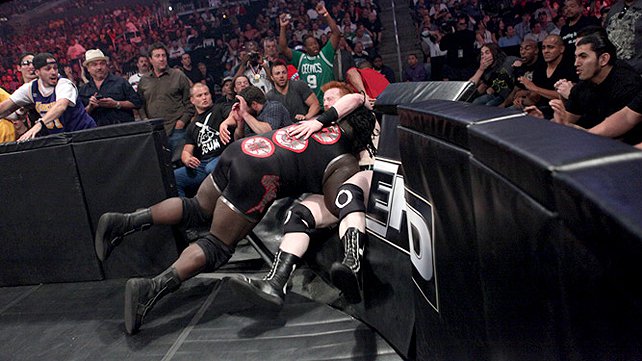
In the midst of staging a comeback against Daniel Bryan on Raw, The Ultimate Underdog seemingly hit a snag: The bearded half of Team Hell No had absorbed a slingshot and fell onto the middle rope, but he was resting right next to the turnbuckles in the corner. Bryan?s awkward ring positioning made it all but impossible for Mysterio to swing into his patented, area-code-alluding finisher.

Undeterred, The King of Mystery adapted to the circumstance and creatively incorporated the ring post into the 619. The innovative tweak excited fans and allowed Mysterio to splash Bryan and win their all-important first singles encounter.

Mysterio is not the only Superstar to have mutated a trademark maneuver in the name of convenience. Zack Ryder found himself in a similar predicament on Raw. Facing Damien Sandow, Long Island Iced-Z kept on the attack even after ?The Enlightened One? dodged his Broski Boot and rolled out of the ring. Without missing a beat, Ryder nonetheless booted Sandow from inside the ring. Everybody?s favorite broski, it would appear, was determined to serve Sandow sole one way or another.

Sometimes, situations allow for use of traditional weapons of choice; other times, a quick-thinking backup to the tried-and-true is what?s needed. Whether it?s propping a ladder across the top rope to get extra height and bounce on a 450 Splash (See: Gabriel, Justin), leaping off the chain link walls of the Elimination Chamber to Disaster Kick a giant (Rhodes, Cody) or finding a particularly unfriendly surface on which to plant an opponent (Orton, Randy), many of today?s Superstars have created scintillating variations of the finishers just by adapting to unique situations and battlegrounds.? (WATCH PLAYLIST)

So how does Mysterio?s around-the-post 619 stack up to the many other spur-of-the-moment ring innovations?? Watch video of these hand-selected maneuver mutations and vote for your favorite! (VOTE NOW)

View Comments

Source: http://www.wwe.com/shows/raw/2012-11-26/finishing-moves-with-a-twist

resolute national enquirer whitney houston casket photo jk rowling qnexa kingdom of heaven national enquirer whitney houston arizona republican debate

Shifting the safety balance for overnight workers

ScienceDaily (Dec. 2, 2012) ? An international team of sleep researchers has developed the world's first screening tool to help reduce workplace accidents and illnesses, including cardiovascular disease and cancer, caused by shift work.

Published in the journal Sleep, the new tool will enable health professionals and industry to better understand individual vulnerability to the health and safety impacts of shift work.

This screening questionnaire for a condition known as shift work disorder (SWD) has been developed by researchers from Monash University, and US partners, Harvard Medical School, Brigham and Women's Hospital, and the Henry Ford Hospital.

At least 15 per cent of workers in Australia, the US, and the United Kingdom, and around 23 per cent of workers in Japan are estimated to work outside normal hours, causing significant disruption to their natural sleep-wake schedules. SWD, characterised by extreme sleepiness and/or insomnia, is thought to affect around 10 per cent of shift workers.

Associate Professor Shantha Rajaratnam, of Monash and Harvard University, said the prevalence of shift work has been unknown due to the lack of accurate assessment tools.

"Shift work is a reality of modern economies, but research has shown that there are very real health risks associated with working outside regular hours," Associate Professor Rajaratnam said.

"Aside from associated health problems, shift workers are significantly more at risk of workplace injuries. The workers most affected by sleep disruption -- those with SWD -- account for a significant proportion of this risk and need to be identified."

Shift work, especially overnight, is associated with a higher rate of car crashes, industrial accidents, actual and near-miss injuries and quality-control errors on the job.

Secondary health problems linked with shift work include cancer, cardiovascular disease, diabetes, gastrointestinal diseases and mood disorders, including depression.

"This questionnaire is an important step in better understanding causes of vulnerability to shift work, and targeting interventions to those who most need them," Associate Professor Rajaratnam said.

"However, this is only a first step and further tests of actual impairment from lack of sleep must be developed for implementation in occupational settings."

"More collaboration between researchers, industry and government partners is needed to tackle these significant challenges and make shift work as safe and productive as possible."

Share this story on Facebook, Twitter, and Google:

Other social bookmarking and sharing tools:


Story Source:

The above story is reprinted from materials provided by Monash University.

Note: Materials may be edited for content and length. For further information, please contact the source cited above.


Note: If no author is given, the source is cited instead.

Disclaimer: This article is not intended to provide medical advice, diagnosis or treatment. Views expressed here do not necessarily reflect those of ScienceDaily or its staff.

Source: http://feeds.sciencedaily.com/~r/sciencedaily/~3/jkHYZrFQq-c/121203093802.htm

newt gingrich wife callista rick perry travis barker get back on board rob lowe peyton manning what is sopa

Monday, December 3, 2012

Global water crisis: Seen from the first Himalayan glacial trickle

Global water crisis: Reporter William Wheeler talks about water stress from the effects of climate change high in the Himalayas where India and Pakistan's great rivers start to Haiti's fresh-water pollution.

By William Wheeler,?Contributor / December 2, 2012

Global water crisis: This reporter's notebook feature is part of the cover story package for the Dec. 3 issue of The Christian Science Monitor Weekly magazine. Here reporter William Wheeler's photographer and two trekking guides hike into the glacial valleys of the Nepalese Himalayas, near the Tibetan border.

William Wheeler

Enlarge

In the Nepalese Himalayas in 2009, I trekked into the Langtang Valley, just short of the Tibetan border, and to a village of empty plywood cabins. The arrival of the summer monsoon season had chased the trekkers away.

Skip to next paragraph

' + google_ads[0].line2 + '
' + google_ads[0].line3 + '

'; } else if (google_ads.length > 1) { ad_unit += ''; } } document.getElementById("ad_unit").innerHTML += ad_unit; google_adnum += google_ads.length; return; } var google_adnum = 0; google_ad_client = "pub-6743622525202572"; google_ad_output = 'js'; google_max_num_ads = '1'; google_feedback = "on"; google_ad_type = "text"; google_adtest = "on"; google_image_size = '230x105'; google_skip = '0'; // -->

Just uphill was a Buddhist temple and, behind it, a wrinkled sea of gray ice reached up the steep mountain walls into the clouds ? the Langtang Lirung glacier, one of thousands that make up the largest body of ice outside the poles. In the winter, these glaciers capture precipitation that melts off in warmer months to feed the Ganges, Indus, and Brahmaputra rivers ? and 1.5 billion people in eight countries who depend on them.

At night I could hear the thunderous crackling of distant avalanches on peaks above. By day, I saw shepherds, whose yaks couldn't withstand the summer heat, chanting a prayer for safe passage to higher, cooler climes.

The monsoon, seasonal rain that sweeps across the Indian subcontinent before crashing into the world's tallest mountains, was late, causing the worst drought in 30 years in Mumbai (Bombay), a thousand miles south.

Villagers talked of the arrival of mosquitoes ? heralds of warmer summers and milder winters. The accelerated glacial melt is expected to increase floods in countries downstream over coming decades; earlier melts can reduce water when it's needed most.

In the long run, says Madhav Karki, director of the International Centre for Integrated Mountain Development, the rivers themselves may become seasonal, with potentially profound effects on the countries below.

Water is power

My travels in South Asia were a reminder of an ancient truth, often lost at the magical turn of a tap: A society's fate turns on its water supply. Water is power.

Covering global water issues, I've seen up close how the gap between the water rich and the water poor is often the line between life and death. In Haiti, I met people who took their water from rivers or nearby wells. Since the outbreak of cholera, those very water sources threaten their lives.

In Bangladesh, I saw how too much water creates problems: More intense rain deluges, that one scientist with the United Nations' Intergovernmental Panel on Climate Change told me might already reflect climate change, had increased flooding and river erosion. I met people whose homes, crops, and water supplies were repeatedly wiped out. In a country with a population roughly half that of the United States packed into an area about the size of Idaho, they had few options but to move to low-lying, vulnerable coastal lands. Or they joined the nearly 1 billion slum dwellers worldwide trying to ascend the economic ladder and increasing demand for water in all its forms.

Water: source of life and conflict

Source: http://rss.csmonitor.com/~r/feeds/csm/~3/RsmA5TdcVuY/Global-water-crisis-Seen-from-the-first-Himalayan-glacial-trickle

bridge to nowhere primary results dale earnhardt jr michigan primary school shooting daytona 500 winner cleveland plain dealer